From Delhi, our headquarters, impact looks neat. It fits into slides, metrics, and carefully chosen words.
In interior Meghalaya, it looks nothing like that.
There are no banners here. No one knows our name. There is just a health worker, a phone or a laptop, and a decision relating to patient care that needs to be made before the day runs out.
We often introduce ourselves as “AI for social impact.” It sounds right, and yet outside the development sector, it doesn’t always land. The phrase feels too broad, too clean, almost abstract- unable to capture the texture and intent behind our work.
So instead of explaining what we do, let’s take a drive from Shillong — past winding hill roads, thinning traffic, and stretches where phone signals fade — to Langtor village in the West Khasi Hills of Meghalaya. What looks close on a map unfolds slowly here, measured more in hours than kilometres.

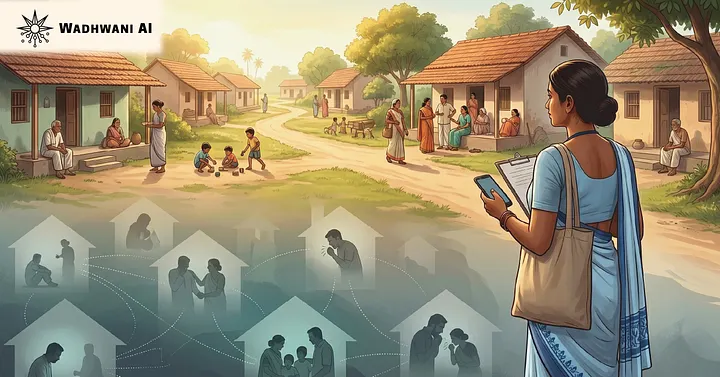
It’s easy, from cities, to criticise systems and talk about what hasn’t been done. But being here forces a pause. You begin to see how health services actually reach people — step by step, layer by layer — and how much depends on the public health system quietly doing its job.
In villages like Langtor, the sub-centre is often the first point of care. Located within the community, it is usually run by a Community Health Officer (CHO) — most often a nurse — trained to respond to the most common complaints that walk through the door.
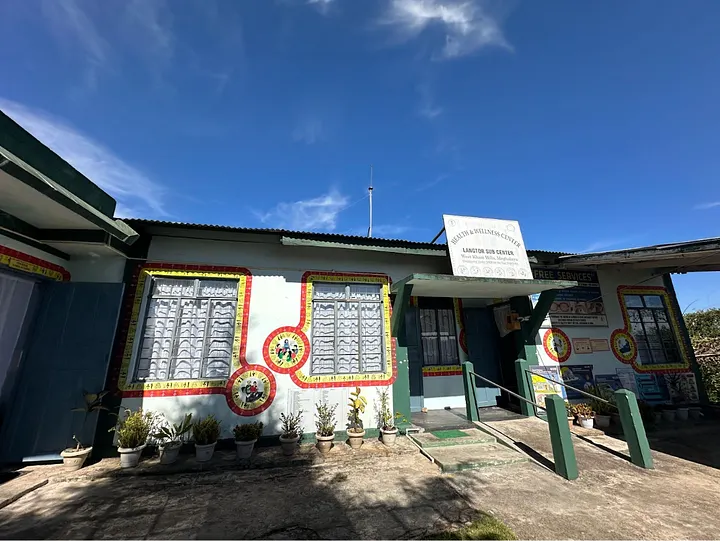
“For them, we are the doctors,” the CHO tells me.
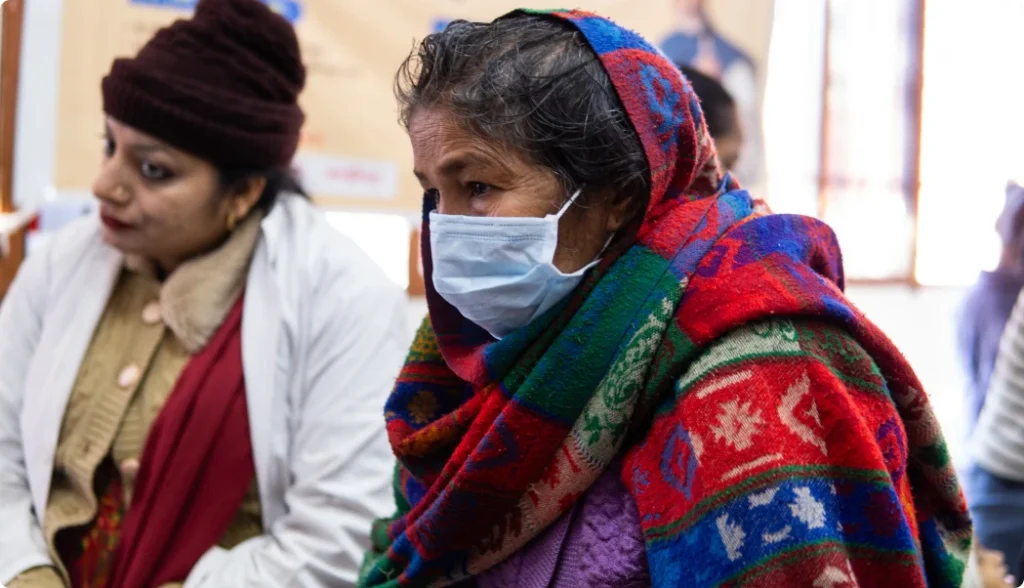
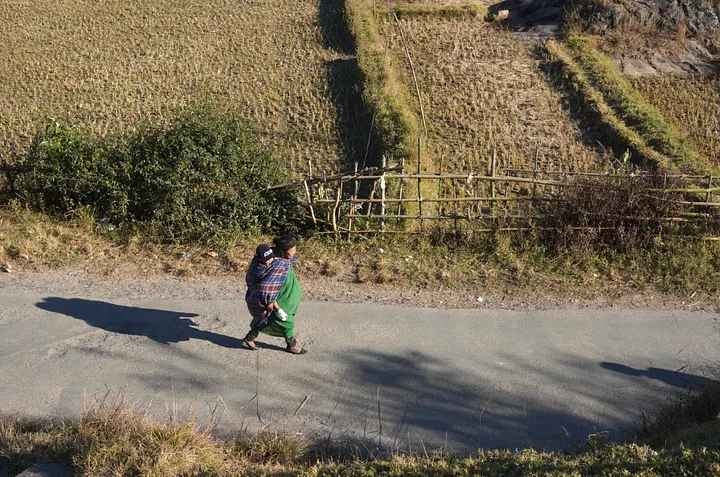
I see what she means moments later. A mother walks in carrying her eight-year-old on her back — the familiar way in North Eastern India. The child’s foot is swollen, badly infected. The family survives on daily wages; the mother works on nearby farms, earning what she can. Earlier that day, the girl stepped on a rotten piece of wood meant for firewood.
For families like hers, the sub-centre isn’t a referral point. It’s the place where decisions are made.
The CHO examines the foot carefully. She knows what she’s doing, but she wants to be certain — to make sure the infection doesn’t spread, to make sure the child can walk again. She turns to eSanjeevani, the Government of India’s national telemedicine platform that connects health workers in remote areas with doctors at PHCs and district hospitals.
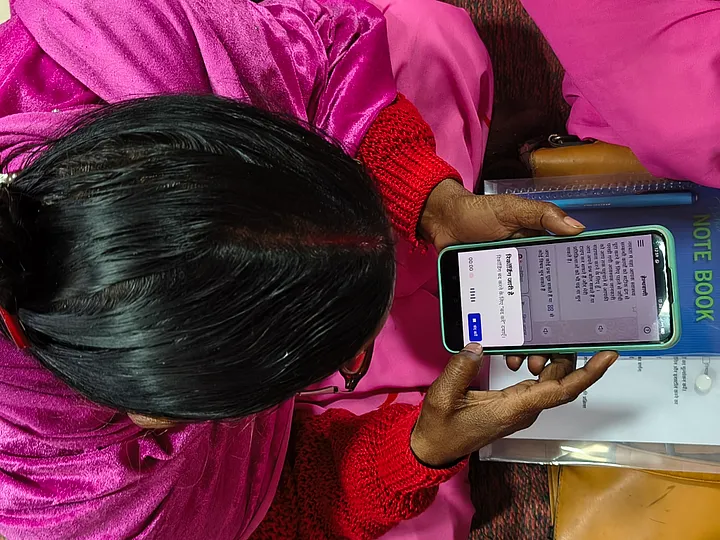
She logs in and begins documenting the case — recording symptoms, duration, and observations.
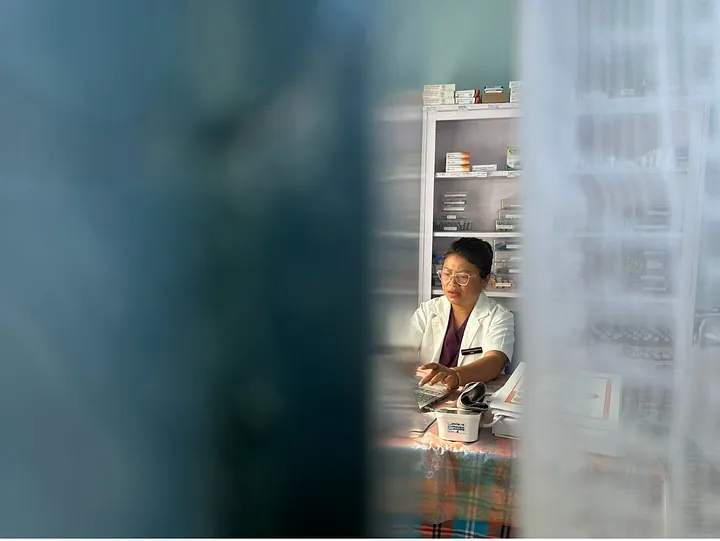
eSanjeevani has been a game changer for rural healthcare delivery. It allows people to consult doctors without losing a day’s wages or travelling long distances. By connecting hubs — doctors in hospitals — with spokes — health workers in villages — it reflects a deep understanding of ground realities and the need to bring care closer to communities.
As eSanjeevani reached more communities, the number of consultations grew. With health workers documenting cases in their own ways — sometimes in a line, sometimes in a word, sometimes in detail — the importance of capturing patient information more consistently became increasingly clear, especially when decisions had to be made quickly.
This is where Wadhwani AI’s work quietly sits — not as something separate, but as support shaped by how the system actually functions on the ground. Rather than building in isolation, the focus was on understanding how CHOs work under pressure, how doctors review cases at scale, and what would genuinely make their decisions easier without adding burden.
The result was the Clinical Decision Support System (CDSS) — integrated into eSanjeevani to support more structured documentation and clearer clinical histories.
For the CHO, this simply felt like a better version of the same platform.
“The platform really helps,” she says. “Sometimes, in the middle of everything, we forget to ask the right questions. These prompts remind us. There have been cases where something that looked like a simple stomach ache turned out to be a gynaecological issue — because the right questions were asked.”
For doctors at the hubs, it meant receiving clearer, more complete patient information — allowing them to move faster without compromising quality, even while managing heavy workloads and walk-ins alongside online consultations. The system also offers clinical suggestions, supporting decision-making while keeping the doctor firmly in control.
When I asked the CHO about CDSS, she didn’t recognise the term. The doctor didn’t either.
To them, eSanjeevani had simply improved — more structured, more reliable, easier to use.
And perhaps that is the highest form of trust: when a system gets better without demanding attention, when people can rely on it without needing to know who made it work better.
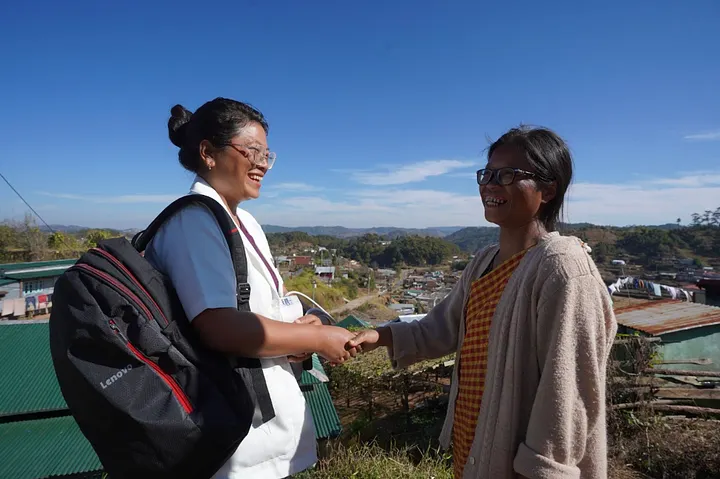
Standing in Langtor, the distance between how impact is described and how it is lived finally made sense.
The people most affected by our work might never know our name — and they don’t need to. What matters is that the right questions are asked, the right decisions are supported, and trust is built quietly into systems that people depend on every day.
This is what AI for social impact looks like on the ground — not as a headline, but as something that works quietly, in the background.