The Hindi word “kachcha” (कच्चा) means raw, unfinished, or not yet ready. That’s how we described our first paper prototypes while preparing for user research with Anganwadi workers in Madhya Pradesh. To our surprise, those kachcha prototypes became the most important design decision we made. Let me take you into the field and show you why.
Written by Abhiniti Arora, Design researcher, Wadhwani AI
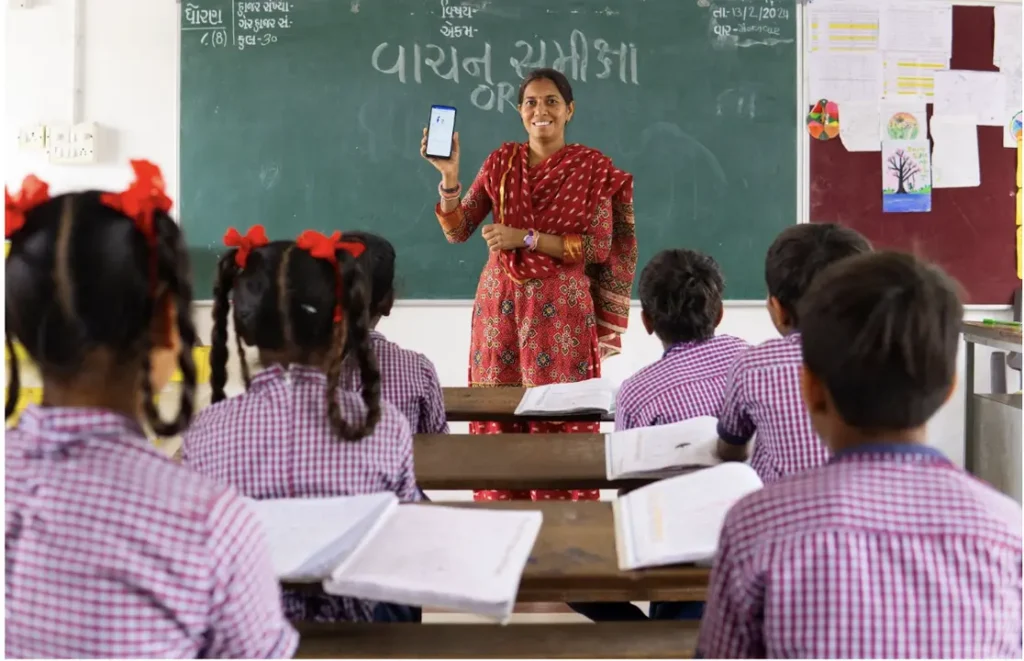
In a remote village in Satna, in the summer heat of Madhya Pradesh, India, an Anganwadi centre sits near the edge of a field, bustling with a few children of age group 3 to 6 years eager to get their first meal of the day. In India, the Anganwadi ecosystem is the backbone of early childhood care, nutrition leading to growth and education for children from 0–6 years of age. The Anganwadi worker (AWW), a quiet hero at the center of it all, who works on the frontline to ensure that families in the village have access to the right nutrition information, monitors the growth of the child, and ensures that take home ration (THR) and meals reach children.
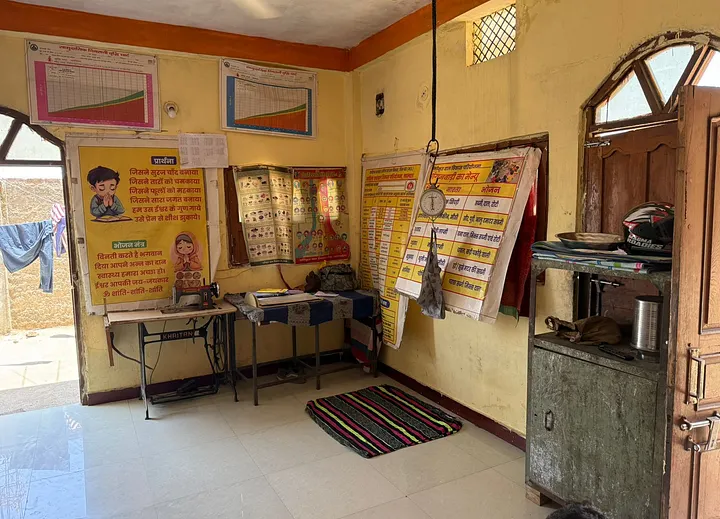
The Anganwadi center in Madhya Pradesh.
As part of Saksham Anganwadi POSHAN 2.0 program (Link), Anganwadi workers have to conduct growth monitoring for every child in their centre every month. This is essential for identifying whether a child is gaining weight and growing in height as expected for their age, and whether early support is needed to prevent malnutrition before it becomes severe. But in practice, growth monitoring is not a simple measurement activity inside the Aanganwadi center. It sits within a crowded workday, shaped by beneficiary availability, traditional tools, Data upload related issues and digital fatigue, and tight timelines.
At Wadhwani AI, we are developing a video based anthropometry solution designed to measure a child, through a short smartphone video captured by the Anganwadi worker. While data collection across multiple states has helped us train and refine our AI models, we knew the technology would mean nothing if it didn’t fit into the daily lives of the Anganwadi workers themselves.
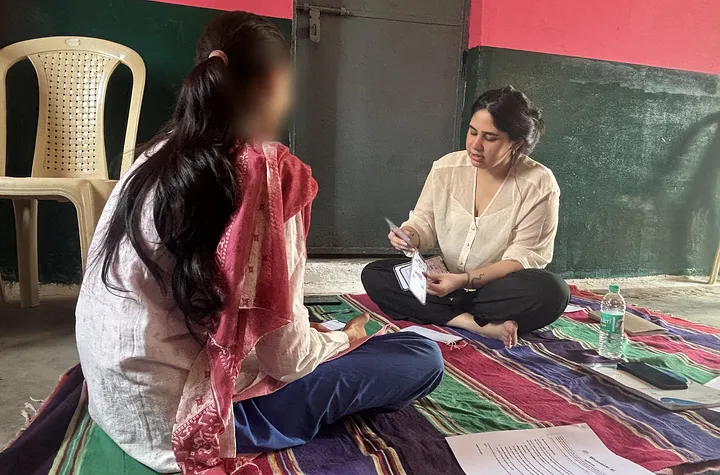
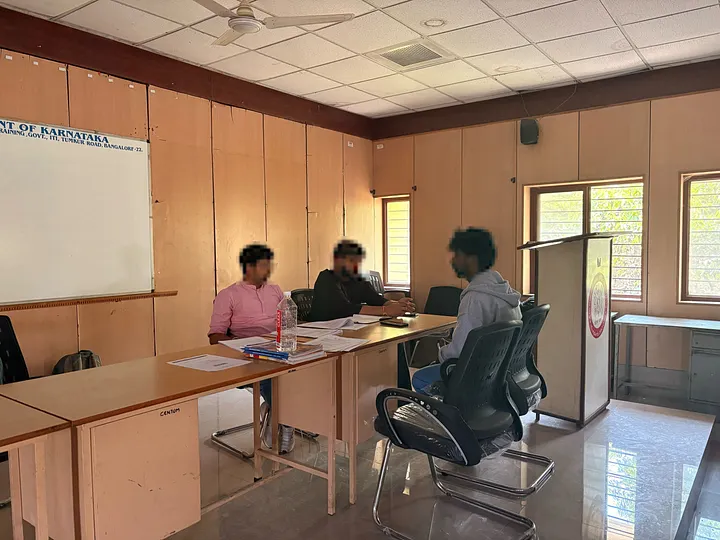
Conducting user research session with an Anganwadi worker in Madhya Pradesh.
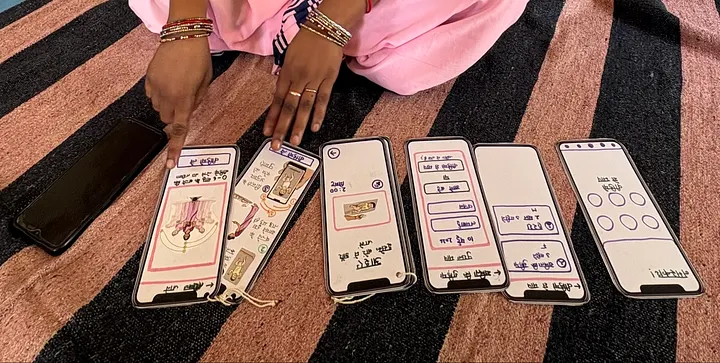
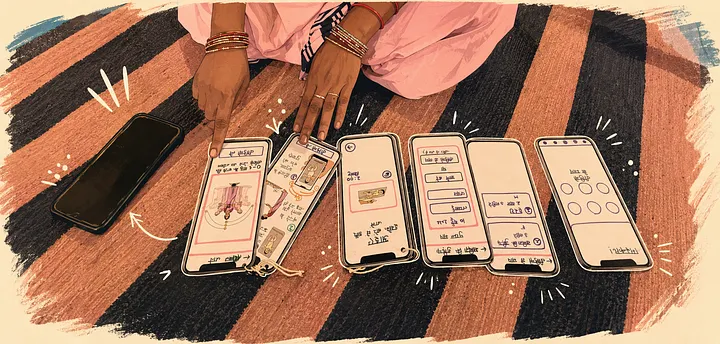
So this time, I discussed a few potential approaches within our dedicated design department and members and I decided to go back to old practice and chose paper prototypes. It made sense to the entire solution team as well as we were at an early design stage. Paper prototyping is an old method which was quite effective back in the days. The idea was not to review the method but pick a method which does the justice to this attempt. We had created paper screens for each stage of the user flow from — onboarding, instructions, video capture, error states to AI results, and for each stage, we had made multiple iterations that the user could flip between, lay out side by side, and rearrange. The flow could be built in front of her, live, with screens moving on the floor rather than progressing on a phone.
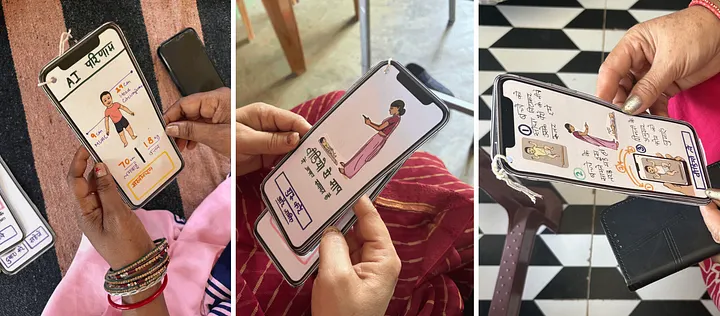
Paper prototype tool used for user research in Madhya Pradesh.
There is something important in the ‘kachcha’ nature of paper prototypes. When a design looks finished, a user treats it as final and may hesitate to question it or tell you something is wrong. Even a digitally polished prototype communicates: this is what it is. This is how users think because they believe what they see.