Tuberculosis is curable, but treatment requires adherence to a strict regimen—any lapse can substantially increase the risk of drug-resistant TB (DR-TB) and adverse outcomes.

The Challenge
Loss to Follow-Up (LFU)—when TB treatment is interrupted for two or more consecutive months—is an important treatment outcome. Among people diagnosed with drug-sensitive TB in India in 2021, 2.6% were lost to follow-up, while 4.2% died during treatment. At the population level, India’s TB mortality rate was estimated at 22 deaths per 100,000 people in 2023, down from 28 per 100,000 in 2015. Together, these indicators highlight the importance of timely diagnosis, treatment continuity, and sustained patient support throughout the TB care journey.
Our AI Solution
Prediction of Adverse TB Outcomes (PATO) is an AI-powered risk stratification solution that identifies patients at higher risk of adverse outcomes (including LFU and mortality) at the onset of TB treatment, enabling prompt, targeted, and effective interventions that help lower mortality and prevent drug resistance over time.
PATO enables health systems to move from reactive to preventive TB care by identifying patients at higher risk of loss to follow-up or mortality early in treatment, helping focus outreach and support where they are most needed.
The solution correctly identifies 69% of adverse outcomes by targeting the top 35% highest-scoring patients at Pan India level.
By enabling targeted interventions and more efficient use of limited healthcare resources, PATO can support treatment continuity and contribute to India’s TB elimination goals.
How it Works
 01
Data Collection
Persons with TB (PwTB) are tracked from detection to completion of treatment, with detailed information — including medical history and socio-economic status — recorded on the Ni-kshay portal.
Data Collection
Persons with TB (PwTB) are tracked from detection to completion of treatment, with detailed information — including medical history and socio-economic status — recorded on the Ni-kshay portal.
 02
Analysis and Risk Stratification
The model analyzes demographics, location, comorbidity status, and other factors to predict the likelihood of an adverse outcome such as LFU or mortality.
Analysis and Risk Stratification
The model analyzes demographics, location, comorbidity status, and other factors to predict the likelihood of an adverse outcome such as LFU or mortality.
 03
Categorization
PATO helps healthcare providers detect and categorize individuals as high or low-risk for adverse treatment outcomes.
Categorization
PATO helps healthcare providers detect and categorize individuals as high or low-risk for adverse treatment outcomes.
 04
Intervention
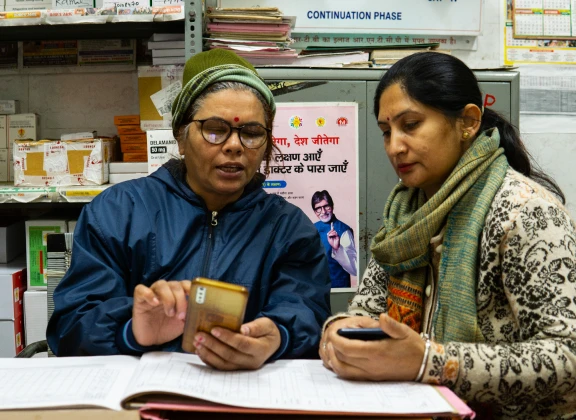
Healthcare workers use this information to conduct intensified follow-ups and provide additional support to identified high-risk patients.
Intervention
Healthcare workers use this information to conduct intensified follow-ups and provide additional support to identified high-risk patients.
Where It's Deployed
Pan-India in collaboration with the Central TB Division (CTD) under the National Tuberculosis Elimination Programme (NTEP).
28
States
8
Union Territories
Attribution and Impact
- Attribution is established by linking AI-driven risk predictions to reductions in adverse outcomes (LFU and mortality) using routine program monitoring and intervention data reported by government health officials and NTEP programme managers.
- Reduced LFU and Mortality: A program evaluation in Madhya Pradesh found a 27 percent reduction in combined LFU and mortality in PATO supported districts compared with control districts without PATO support.
- Reduced Adverse Outcomes: Targeted delivery of combined interventions such as Direct Benefit Transfer with Nutrition Kits and Differentiated Care with Nutrition Kits to PATO-flagged high-risk cases can reduce adverse outcomes to five percent and 5.9 percent, respectively, compared with 12.6 percent among individuals with TB who were not flagged and did not receive these interventions.
Our Other Solutions
Partners